

1. London sets a dollar price
Gold trades globally in US dollars per troy ounce (31.1035 grams). The reference most of the world quotes from is the LBMA Gold Price, set in two electronic auctions a day, at 10:30 and 15:00 London time, with continuous spot trading in between. Nothing in India changes that number; India imports almost all of its gold and takes the world price as given.
2. The rupee decides what that costs you
A dollar price becomes a rupee price through the USD–INR rate, and this is the step Indian savers most often miss. Gold can be perfectly flat in dollars and still rise in rupees, simply because the rupee weakened. Over the long run a meaningful slice of Indian gold returns has come from exactly that, which is also why gold has historically behaved like a hedge against a falling rupee. The year-wise history puts numbers on it: from 1983-84 to 2024-25 the dollar price rose about 6 times, and the rupee price about 41 times.
3. Duty, cess and landing costs are added
Imported gold carries customs duty plus an agriculture infrastructure and development cess, and the government changes those rates by notification. The swings are large: the headline rate was cut to about 6% in July 2024 and raised to about 15% from 13 May 2026. On top of duty sit freight, insurance and refining costs. The result is the landed domestic price. The India Bullion and Jewellers Association publishes widely used morning and afternoon reference rates by purity. They are a trade benchmark, not a government price.
4. A refiner quotes a two-way spread
Finally, whoever actually deals with you (Augmont, in our case) publishes a buy rate and a sell rate around that landed price. The gap between them is the spread, and it pays for making a market at all: holding inventory, hedging, and standing ready to take metal back from you on a day nobody else wants it.
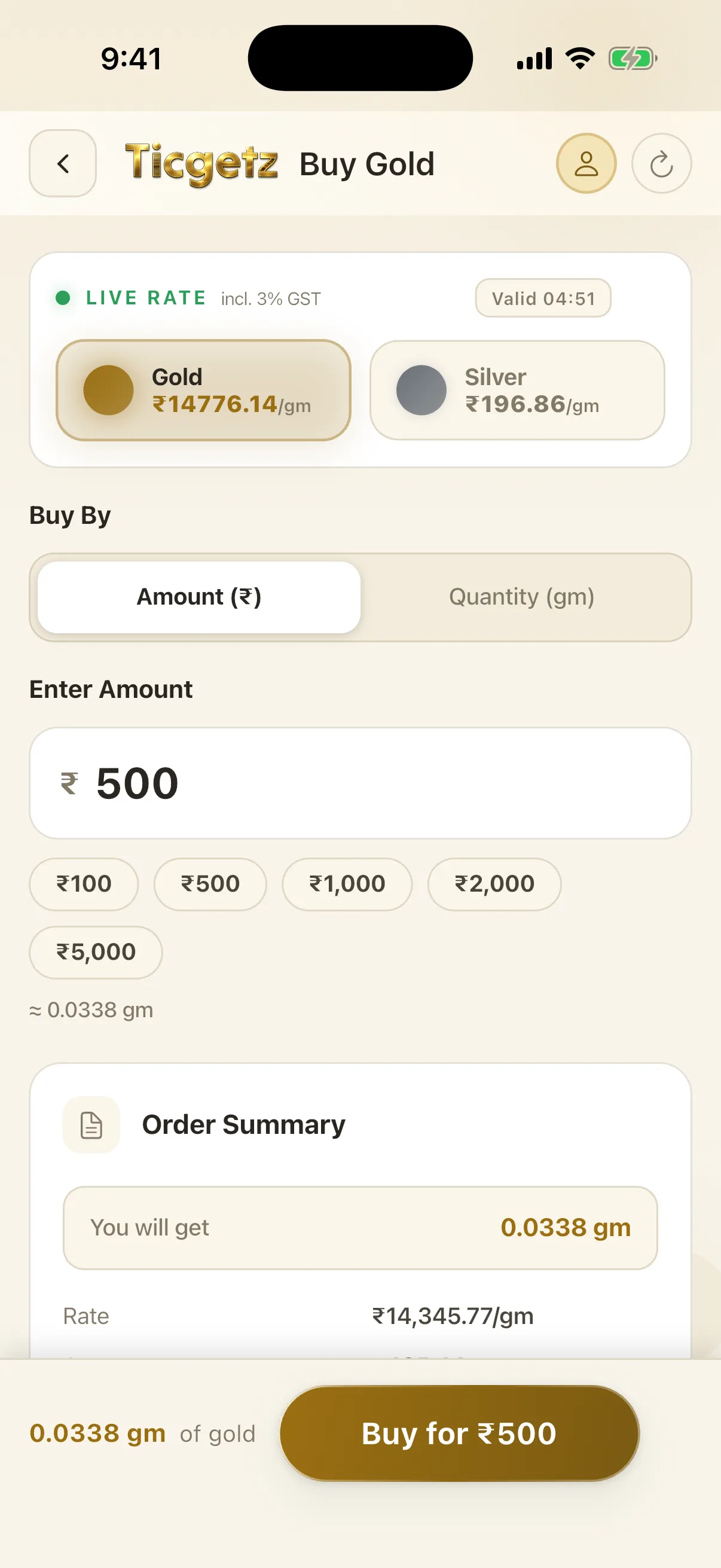
| What you see | What it means |
|---|---|
| Buy rate ₹/g | What one gram costs you right now, before GST |
| + GST 3% | Statutory, on purchase only. Not charged again when you sell |
| Sell rate ₹/g | What we will pay you per gram right now |
| Rate validity | A quote is held for a short window at checkout; after that it re-prices |
Why the rate moves while you are looking at it
- Global spot trading runs nearly around the clock; the biggest moves usually follow US data and Federal Reserve decisions.
- The rupee moves on its own schedule, and on some days in the opposite direction to gold, which mutes or amplifies what you see.
- Indian demand seasons (wedding months, Dhanteras, Akshaya Tritiya) tilt local premiums, though far less than the two factors above.
- Policy, occasionally and sharply: an import duty change is a step, not a drift.
Reading a jeweller's quote with the same lens
A jeweller quotes a 22K rate (91.6% pure), so it is naturally below the 24K number you see here, and then adds making charges plus GST. Comparing a 22K jewellery rate to a 24K bullion rate and concluding one is cheaper is the most common mistake in Indian gold pricing. Convert to the same purity first, then add making charges, then compare.
| Line | Amount per gram |
|---|---|
| 24K rate | ₹10,000 |
| 22K metal at 91.6% | ₹9,160 |
| Making charge at 15% | ₹1,374 |
| GST: 3% on metal, 5% on making | ₹344 |
| Price of the piece per gram | ₹10,878 |
Ask for that breakdown in any shop. To compare it with digital gold, see what digital gold costs on day one, and if you would rather not time any of this at all, read about buying on a schedule. The current rate is always on the Buy screen.
Questions people ask
Why is the digital gold rate different from the rate in the newspaper?
Newspaper rates are usually city bullion association rates for 22K or 24K at a fixed daily time, often excluding GST. A live platform rate is a 24K buy quote at this second, before GST. Same metal, different conventions.
Why is the sell rate lower than the buy rate?
That gap is the market-maker's spread: the cost of standing ready to both sell you metal and buy it back at any time. It is not a platform fee, and it is visible to you before you transact.
Does the rupee really matter that much?
Yes. Indian gold prices are the dollar price times the USD-INR rate plus duty. A 3% rupee depreciation raises the rupee gold price by roughly 3% even if the dollar price never moves.
Who decides the gold rate in India?
No single authority does. The price starts from the global dollar price, is converted at the USD-INR rate and has import duty and costs added. The IBJA publishes widely used reference rates, and each dealer then quotes its own buy and sell rates.
Does gold cost the same in every Indian city?
The metal is the same, but local rates can differ a little because of transport, local association rates and dealer margins. Digital gold is quoted at one live rate wherever you are.
Sources
- LBMA Gold Price · London Bullion Market Association
- Daily opening and closing gold rates · India Bullion and Jewellers Association
- Customs duty on gold and silver raised to 15%, effective 13 May 2026 · TaxGuru
- Gold Demand Trends · World Gold Council
- GST goods and services rates · Central Board of Indirect Taxes and Customs
From the Ticgetz Gold team, drafted with AI assistance and checked against the sources above on 3 November 2026. Ticgetz sells digital gold, so weigh what we say accordingly. This is general information about how digital gold works in India, not investment or tax advice, and rules change. Rates quoted anywhere on this site are live market rates and are not a forecast.